
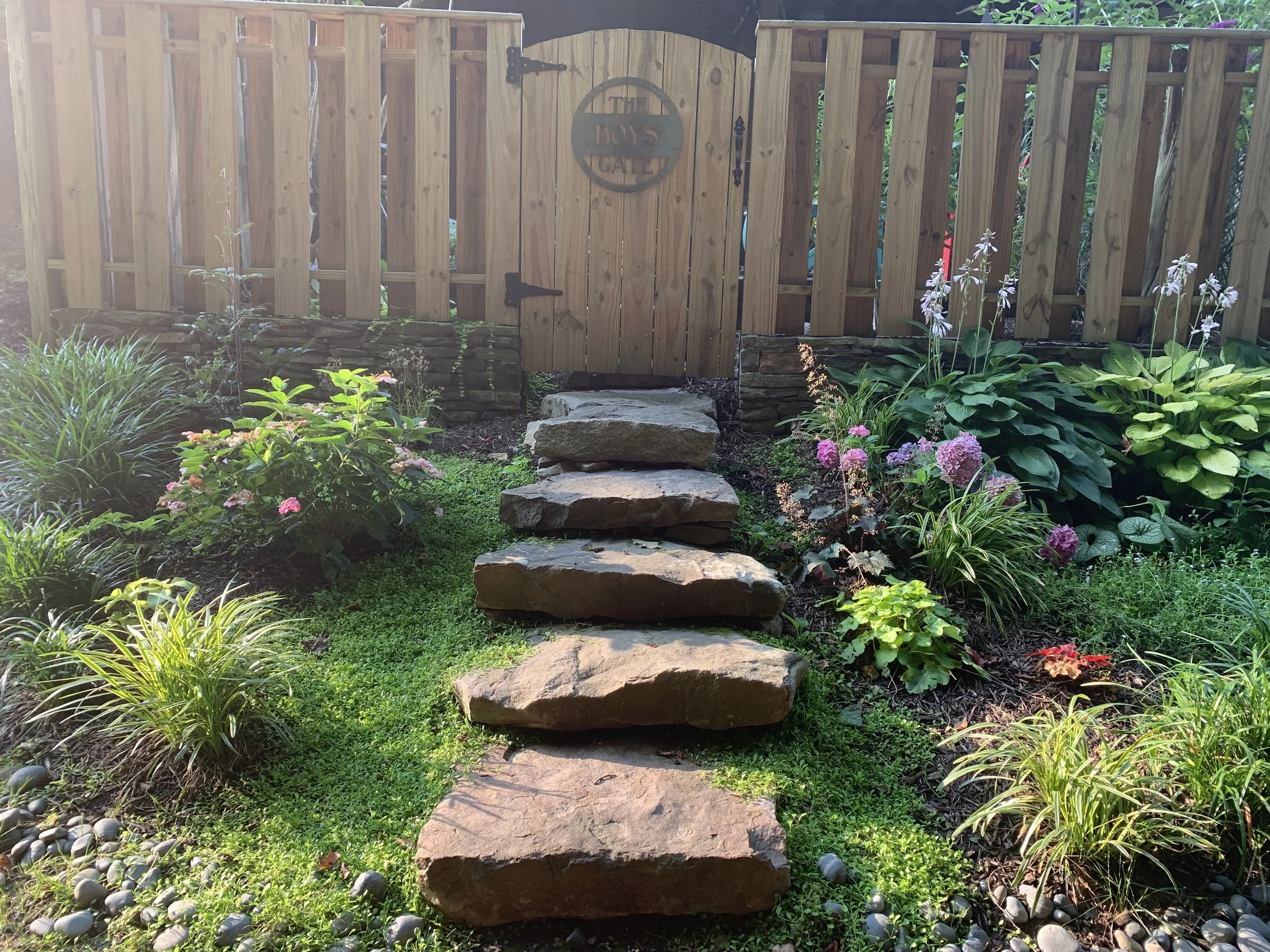
OUTSIDE STEPS, STAIRS & PATHS
SAfe Passage Through Every Season
Get to Where You Need to Go - Safely
Northern Virginia's terrain doesn't always cooperate. That gentle slope leading to your backyard? It becomes a hazard when January ice arrives. Those concrete steps you installed years ago? They're now cracking, crumbling, and creating liability with every trip to the mailbox.
Our region's heavy clay soil makes outdoor access even more challenging. It swells when wet, shrinks when dry, and shifts constantly—pushing surfaces out of alignment and creating the kind of uneven footing that leads to falls.
At Green Lady Masonry & Drainage Solutions, we build steps, stairs, and pathways designed specifically for Northern Virginia conditions. We understand the demands our unpredictable weather places on outdoor structures. We know how our soil behaves season after season. And we've spent decades engineering solutions that handle heavy use while standing up to freeze-thaw cycles year after year.
Whether you need safe passage from driveway to front door, access down a steep slope to your backyard, or an inviting garden path winding through your landscape—we deliver solutions that combine safety, durability, and beauty in equal measure.
BEFORE
AFTER


Create Long-Lasting, Sustainable Paths & Walkways
Why Professional Installation Makes All the Difference
Building steps that last in Northern Virginia takes more than stacking stones or pouring concrete. It takes understanding how water moves through our soil—and what happens when that soil freezes, thaws, and shifts beneath your feet.
Skip the fundamentals, and you end up with steps that settle unevenly, crack apart, collect ice in dangerous spots, or simply fall apart after a few harsh winters. Get them right, and you create outdoor access that performs reliably for decades while adding real value to your property.
At Green Lady Masonry & Drainage Solutions, we approach every project knowing what amateur installations typically miss. Our professional step and pathway construction includes:
Deep excavation below the frost line. Surface-level prep isn't enough here. We dig down to where freeze-thaw cycles can't undermine your foundation.
Properly engineered base layers. We build bases that won't compress or shift over time—because what's underneath matters just as much as what you see.
Strategic drainage design. Water is the enemy of outdoor masonry. We make sure it moves away from your steps, not into them.
Precise step dimensions. Rise and run calculations aren't guesswork. We design steps that feel natural and safe underfoot.
Climate-appropriate materials. Not every stone or concrete mix performs the same in our weather. We select materials proven to handle Northern Virginia conditions.
Construction methods for expansive clay. Our soil swells, shrinks, and moves. We build structures that accommodate that reality instead of fighting it.
These aren't luxury upgrades. They're the difference between steps that serve you well for thirty years—and steps that start failing after three winters.

STEPS, STAIRS & PATHS PORTFOLIO
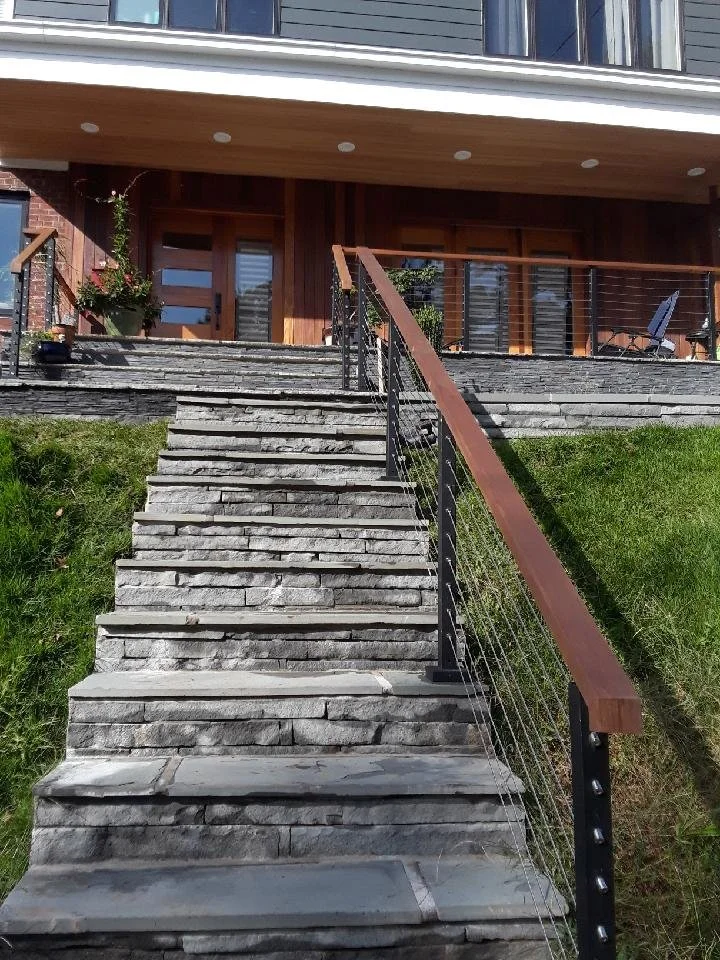
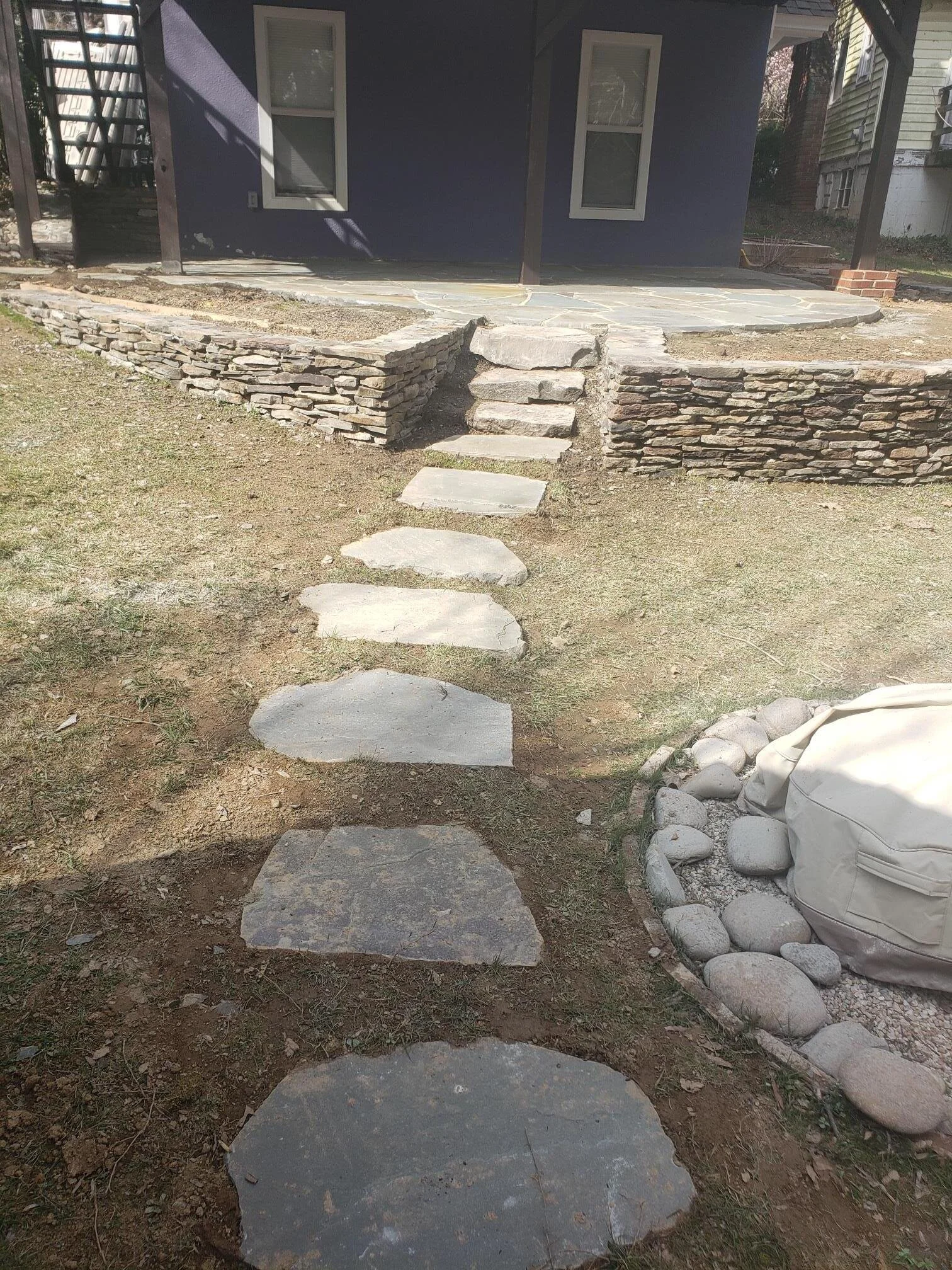
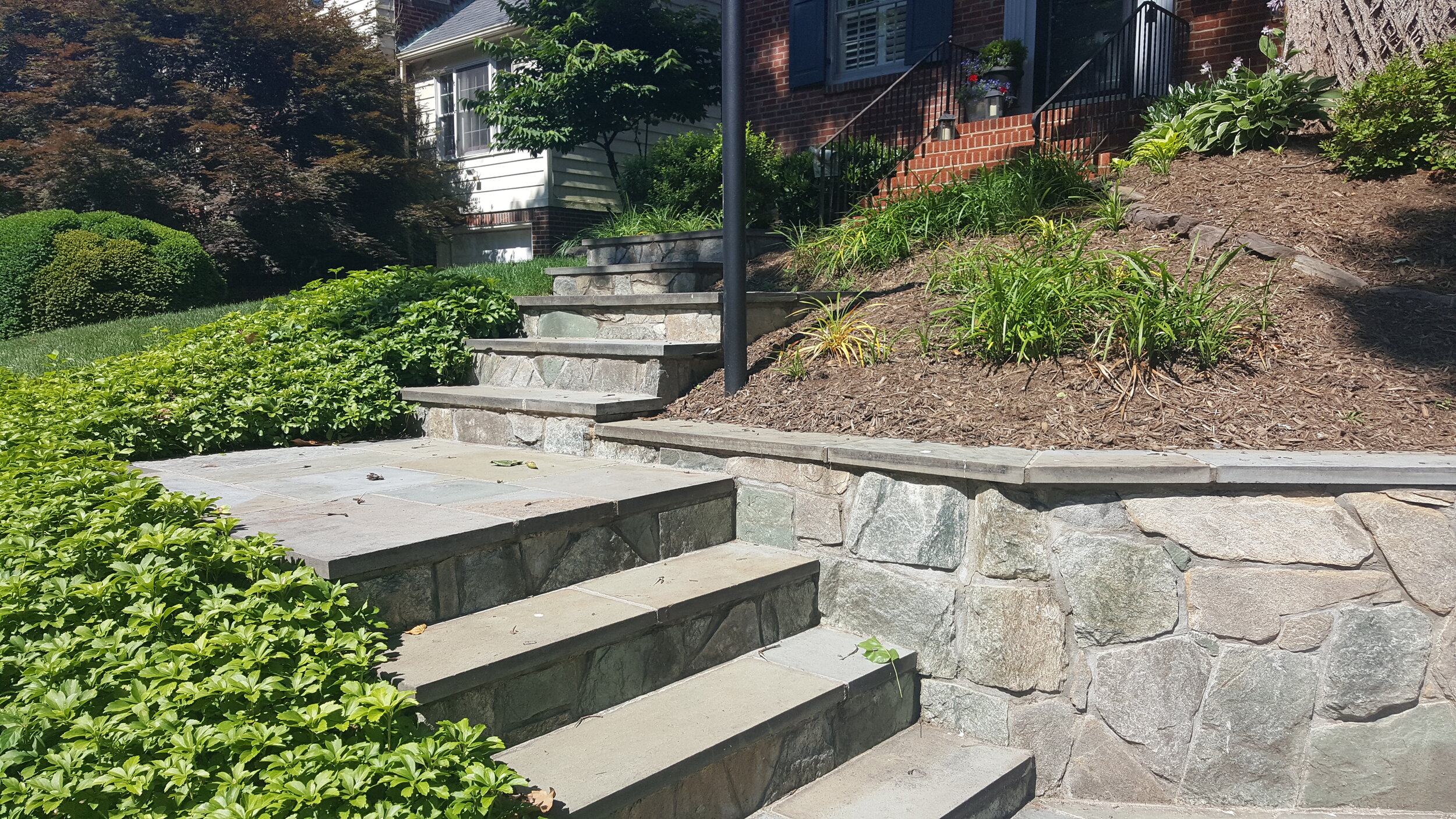
Explore our portfolio to see how we've solved access challenges across Northern Virginia. From grand stone staircases that navigate dramatic elevation changes to intimate garden paths that meander through landscaped beds, each project demonstrates our commitment to safety, durability, and thoughtful design. These installations prove what's possible when engineering expertise meets skilled craftsmanship.
Maintenance and Long-Term Performance
Well-built steps and pathways require minimal maintenance, but attention to a few key areas will keep them performing safely for decades.
Drainage remains critical. Keep channels clear of debris, ensure water flows away from steps rather than pooling, and address any erosion around steps immediately. Most failures we repair started with minor drainage issues that went unaddressed.
Seasonal attention prevents problems. After winter, inspect for any frost heave or movement. Before winter, clear leaves that can trap moisture and create ice hazards. During winter, use calcium chloride rather than rock salt if you need ice melting—it's less damaging to stone and concrete and safer for plants and pets.
Material-specific care extends lifespan. Natural stone (especially bluestone) benefits from periodic resealing. Concrete steps should be resealed every few years to protect against moisture penetration. Brick and paver installations may need joint sand replenishment as it washes out over time.
Engineering Steps for Northern Virginia's Challenging Terrain
Every step installation we complete addresses three critical requirements: safety, stability, and water management. Miss any one of these, and you've built a problem that only gets worse with time.
Northern Virginia properties present unique challenges. Steep slopes. Shifting clay soil. Heavy rainfall. Freeze-thaw cycles that destroy poorly built steps in just a few seasons. We've seen what happens when contractors skip the fundamentals—and we've repaired plenty of those failures.
The Work Starts Before Construction
Our process begins well before any visible building takes place. We analyze your slope's grade and soil composition to understand exactly what we're working with. We determine the optimal step configuration and rise-to-run ratio for safe, comfortable use. We design drainage that prevents water accumulation and ice formation. We plan excavation depth to reach stable soil below the frost line. And we integrate the new steps with your existing landscape features so everything works together.
This engineering phase makes the difference. It determines whether your steps serve you well for decades—or become an ongoing maintenance headache that costs you time, money, and frustration.








Choosing the Right Materials for Your Project
Your material choice affects far more than appearance. It determines how much upkeep you'll face, how safe the surface stays when wet or icy, how long your installation lasts, and how well everything holds up through Northern Virginia's demanding conditions.
We work with every material that makes sense for properties in our region—and we'll help you select what works best for your specific situation and budget.
Natural Stone Steps
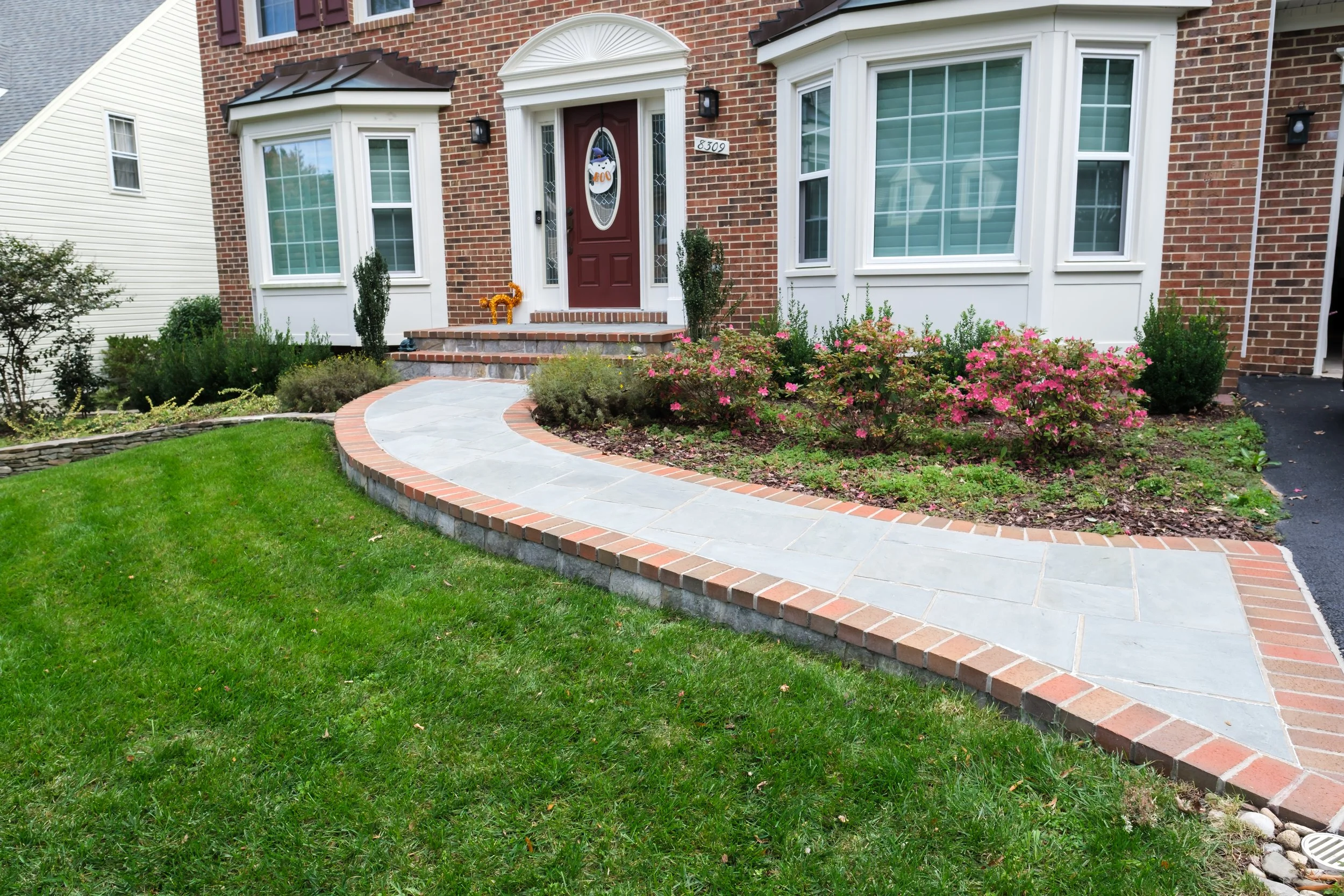
Flagstone, bluestone, fieldstone—natural stone brings timeless beauty that only improves with age. These materials weather freeze-thaw cycles without damage and offer excellent traction even when wet. Stone blends beautifully with any landscape style, from formal to rustic.
We hand-select each piece for the right thickness and shape. Then we fit them together to create installations that look like they've always been part of your property—because in a sense, they will be.
Concrete Steps
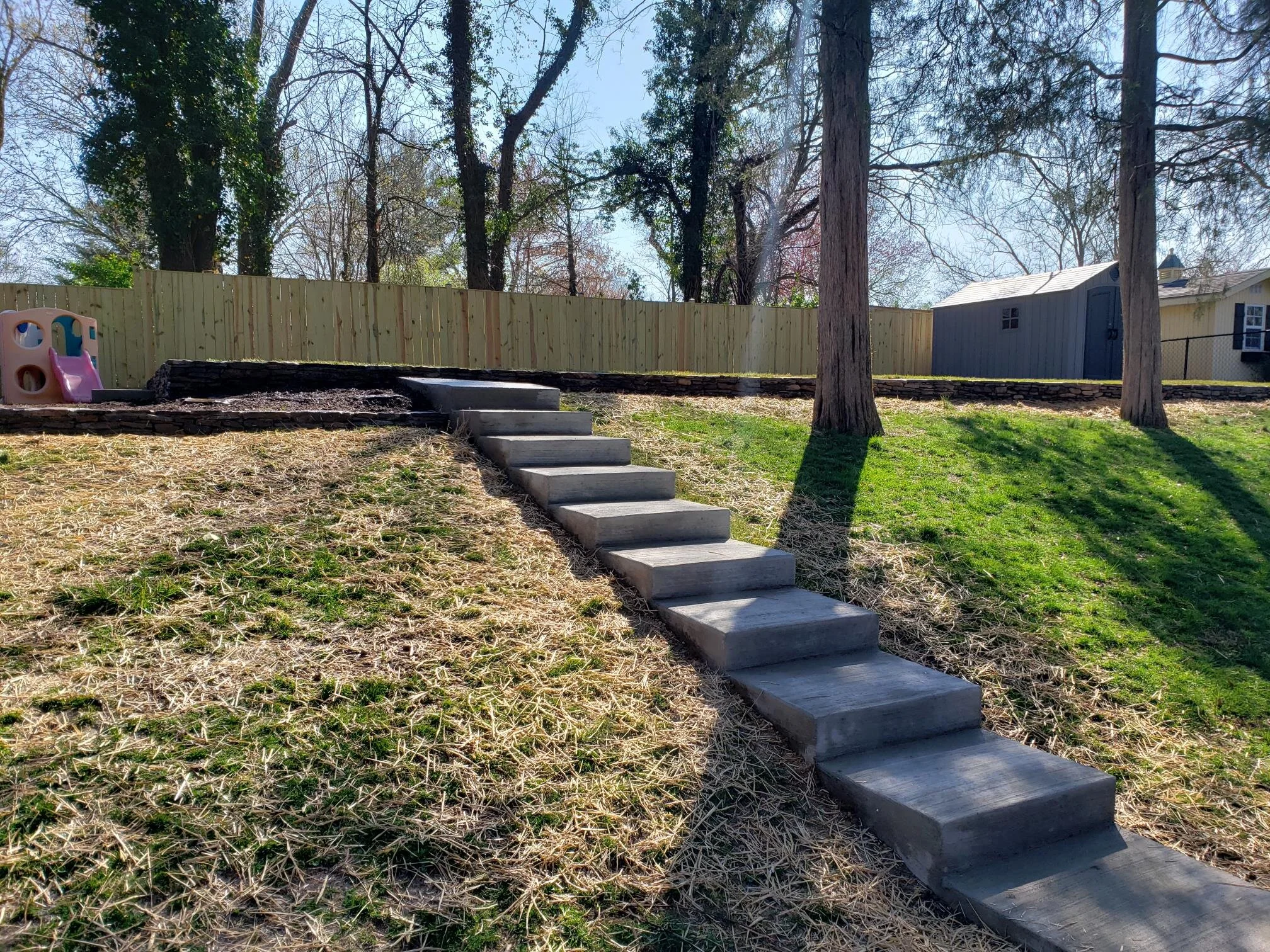
Concrete delivers unmatched reliability at a price point that works for most budgets. We build concrete steps to exact specifications with proper steel reinforcement, drainage provisions, and professional surface finishing.
Concrete excels in high-traffic areas, on steep slopes requiring multiple landings, and anywhere consistent dimensions matter more than decorative variety. Done right, concrete steps perform for decades with minimal maintenance.
Boulder Steps
Massive natural stones create dramatic stairways that look like the landscape formed them. This approach works beautifully for significant elevation changes in wooded or naturalized settings.
Boulder step installation demands real expertise. Each stone weighs hundreds of pounds and must be positioned precisely—for stability, for comfortable climbing, and for visual impact.
Brick and Paver Steps
Classic clay brick or contemporary concrete pavers—either choice combines traditional appeal with modern performance. The key is proper installation.
We build these steps with thorough base preparation and secure edging that prevents the shifting and spreading that plague poorly installed versions. Your brick and paver steps stay tight and level for years.
Stepping Stone Paths
For garden areas, informal walkways, and spaces where continuous paving would feel out of place, stepping stones offer an attractive, practical solution.
We position each stone at the right height and spacing for natural, comfortable walking. Proper bedding keeps them exactly where we put them—no wobbling, no sinking, no constant readjustment.

The Green Lady Difference in Construction
What makes our step and pathway installations different from the competition? We're perfectionists about the details that matter. When we calculate rise and run for steps, we're not guessing—we're applying proven geometry that creates comfortable, safe climbing regardless of who is using them. When we set base material, we're not dumping gravel and hoping for the best—we're compacting in lifts to achieve the density that prevents future settling.
Deborah and Gerardo personally review every step and pathway plan before work begins. They're not delegating your project to a crew and hoping it turns out right—they're on-site, ensuring that what gets built matches what was engineered. This hands-on approach costs us more time and attention than our competitors invest, but it's why our installations perform while others fail.
We're realistic about what works and what doesn't in Northern Virginia. If your site presents challenges that make certain solutions impractical, we'll tell you upfront. We'd rather have an honest conversation now than build something we know will underperform later.
Repair & Replacement Services
We frequently repair or replace failing steps and pathways that were built without proper attention to Northern Virginia's requirements. The patterns are predictable.
Steps that settle unevenly because base preparation was inadequate. Stone steps that shift because they were never properly secured. Concrete steps that crack because no one addressed drainage. Pathways that become impassable mud zones because soil management was ignored entirely.
Every one of these failures was preventable.
Fixing Problems at the Source
When we rebuild, we address root causes—not just visible symptoms. That might mean regrading your slope to improve drainage. Excavating deeper to reach stable soil. Installing subsurface drainage systems. Or completely reimagining the approach to better suit your property's actual conditions.
The goal isn't just to build new steps. It's to solve the underlying problems so your replacement actually lasts. We've seen too many homeowners pay twice for the same project because the first contractor took shortcuts. We'd rather do it right once.
Integrating Steps with Your Landscape
Steps and pathways rarely exist in isolation—they connect spaces and contribute to your property's overall functionality. The best installations integrate seamlessly with patios, retaining walls, drainage systems, and landscape plantings.
We frequently combine step construction with retaining wall installation to manage severe slopes, patio building to create destination spaces, and landscape grading to improve overall water flow. This comprehensive approach means your steps aren't just isolated features—they're integrated components of a well-planned outdoor space.
Frequently Asked Questions About Steps and Pathways
-
Building codes specify maximum rise and minimum run dimensions, but we go beyond minimum requirements to create steps that are comfortable for actual use. Generally, outdoor steps work best with a 6–7 inch rise and a 12–14 inch depth—this creates an easy, natural climbing rhythm. Steps that are too steep become dangerous, especially when wet or icy. We calculate exact dimensions based on your total elevation change and available horizontal distance, ensuring consistency. When every step has an identical rise and run, your brain learns the pattern, making climbing automatic and safe.
-
Ice prevention starts with design. We slope step treads slightly forward so water drains off rather than pooling and freezing. We integrate drainage systems that move water away from the area entirely. We also use materials with natural traction—certain stone finishes, broom-finished concrete, and textured surfaces that provide grip even when wet. We avoid smooth, polished materials in outdoor applications because they are inherently slippery.
-
Yes, we regularly build steps on challenging slopes. The number of steps depends on your total elevation change—for every 6–7 inches of rise, you need one step. A slope dropping 5 feet needs roughly 8–10 steps. Steep slopes often require multiple flights with landings, which improves safety and creates rest spots. For extremely steep slopes, we might recommend switchback configurations to reduce the perceived steepness. Deborah and Gerardo will assess your site and recommend the solution that balances safety, functionality, and budget.
-
Replacement typically requires complete removal of the failed installation, which often reveals why the original steps failed (inadequate base, poor drainage, etc.). We address those root causes before building the replacement. This might mean excavating deeper, installing new drainage, or using different materials suited to your conditions. Most step replacement projects take 3–7 days from demolition to completion. We protect surrounding landscaping during the work and leave your property cleaner than we found it.
-
Yes, we can coordinate lighting integration. Proper lighting transforms outdoor steps from daytime-only features to safe access routes that work 24/7. It allows you to see where you're placing your feet and identify ice or obstacles after dark. We install lighting infrastructure during construction, running conduit before surfaces are finished. This integrated approach looks better and works more reliably than adding solar lights later.
Ready to Solve Your Outdoor Access Challenges?
Contact Green Lady Masonry & Drainage Solutions today for your free consultation. We'll visit your property, assess your terrain, discuss material options, and provide honest recommendations about the best solutions for your specific situation. No pressure, no sales tactics—just straightforward expertise from contractors who've been solving Northern Virginia's outdoor access challenges for decades.
Whether you're dealing with dangerous slopes, replacing failing steps, or creating beautiful pathways, we'll deliver solutions that work.
Safe passage through every season isn't asking too much—it's what proper construction provides.
Call us at (703) 975-7516 or fill out our contact form to schedule your consultation. Let's talk about building steps and pathways that enhance your property's safety, functionality, and value.